Using Portfolio Signal Data to Qualify VC Investors
Founders can dodge wasted pitches by analyzing VC portfolio data instead of trusting firm websites.

Global venture capital hit $510 billion in the first half of 2026, and yet the money is piling into a startlingly narrow slice of the market. AI absorbed 86% of US venture dollars in that window, with OpenAI and Anthropic alone accounting for 43% of all H1 2026 startup funding. For a founder running a live raise, that concentration means something concrete: a large and growing share of the investor universe is either off-limits, actively rotating out of your category, or drifting upstream into checks you're not ready to take. Pitching the wrong fund doesn't just waste time. It burns the scarcest resource a founder has during a raise, which is investor attention, and attention doesn't regenerate on a schedule you control.
The fix is reading the data that's already public. It's reading the data that's already public.
What portfolio signals are, and why they outperform a firm's stated thesis
Portfolio signals are observable, third-party-verifiable patterns in a VC's actual deal history: what they invested in, when, at what stage, how much money changed hands, who else was in the round, and how those positions have evolved since. None of this requires a phone call or a favor. It sits in Crunchbase, PitchBook, and Tracxn, waiting for anyone willing to filter for it.
Compare that to a firm's stated thesis, which lives on its website, in its partners' Medium posts, and in whatever they're saying on social media this quarter. A stated thesis describes what a firm wants to be known for backing. It's aspirational, sometimes strategic, occasionally just stale copy nobody updated after the fund pivoted. Portfolio signals describe what the firm has actually written checks for, repeatedly, under real underwriting pressure. Those are different documents, and founders who treat them as interchangeable end up pitching firms that stopped doing what their homepage says they do months or years ago.
The pattern-recognition point matters here too. Venture investors return to shapes they believe in, including a stage they understand, a go-to-market motion they've seen work, and a sector where they've already built pattern-matching instincts. Finding out who backed your closest comparables, and doing it before you draft an email, is one of the highest-signal qualifying moves available to a founder, because it tells you not what a partner claims to like, but what a partner's fund has actually rewarded.
And when the two don't match, that gap is itself informative. A firm whose language sounds active at seed but whose disclosed deal history on Crunchbase or PitchBook shows nothing recent is no longer the fund its website describes. It's just no longer the fund its website describes, and outreach based on the website instead of the ledger will fail for a structural reason, not a tactical one.
The five categories of portfolio signal data
Deal cadence and recency come first, because timing tells you whether a fund is still playing the game it claims to play. A firm with fewer than five seed deals in the trailing 12 months is not, in any meaningful sense, a primary seed investor, regardless of what the site copy says. Fifteen or more seed deals in that window, with five or more of those as lead positions, is about as strong a signal of active seed investing as the public record offers. Fund lifecycle timing compounds this: a firm that just announced a new fund, or just closed a deal in your sector, is carrying fresh thesis conviction and fresh capital pressure to deploy it. Pulling this is mechanical, filter Crunchbase or a tool like Signal NFX to seed rounds in the last year for the firm in question, and the picture appears fast.
Sector and stage patterns come next. PitchBook's industry breakdown on investor profile pages shows concentration versus experimentation at a glance, and a firm with 80% of its deals clustered in one category is a specialist no matter how broad its stated range sounds. Watch, too, for seed-to-Series A continuity: does the firm follow its own seed bets into the next round, or does it write the check and hand the company off to someone else at Series A? Those are two fundamentally different relationships a founder might be entering, and the portfolio tells you which one you're getting before a term sheet ever exists. AI startups now command roughly a 38% valuation premium at Series A and something like a 42% premium at seed, so a fund with heavy AI concentration in its portfolio may be underwriting non-AI deals against a very different mental model of price than its stated range implies.
Check size behavior is where AUM gets misread constantly. Assets under management is the clearest available signal of which firms can lead a round, write the largest check in it, and stick around for the follow-on. But AUM alone tells you capacity, not behavior, and the two aren't the same thing. A fund sitting on more than a billion dollars that's still writing $500,000 checks at seed is a follower dressed up as a lead. Cross-referencing disclosed round sizes against a firm's stated check range exposes this quickly. It also helps to know that seed-stage capital comes from at least a few structurally distinct firm types (dedicated seed-only funds with a wide assets-under-management range that default to leading, multi-stage funds where behavior varies by partner mandate, solo capitalists and micro-VCs who move fast, and corporate venture arms whose decision cycles run slowest of the group) and matching your round size to a firm's actual behavioral range beats matching it to their marketing range every time.
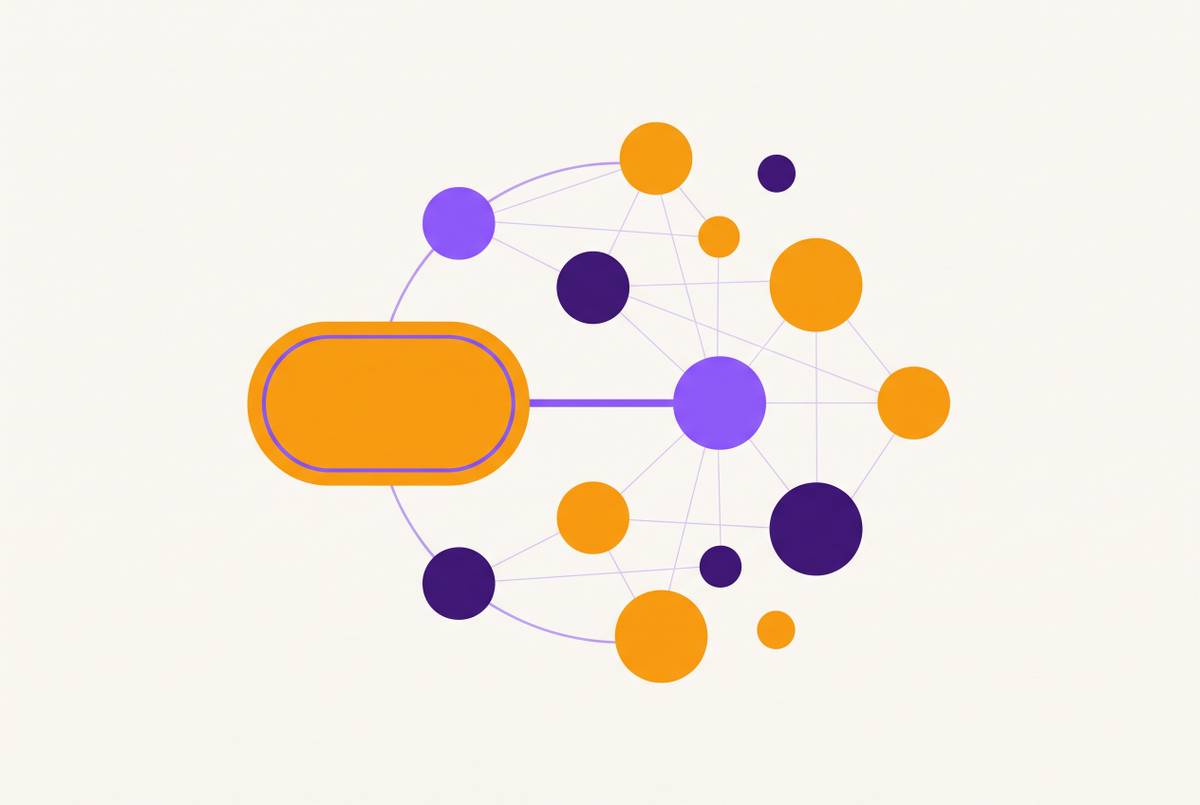
Co-investor network patterns reveal the syndicate a firm actually runs in. Signals.VC, for instance, shows 55 co-investors on its PitchBook profile, including Speedinvest. A founder with a live relationship at Speedinvest already has a plausible bridge into Partech's orbit through that same fund's history. Co-investor data also separates leaders from followers in practice: a firm that always shows up alongside the same lead investor, never leading itself, is a signal you're looking at a follow-on target, not a lead target.
Corporate venture participation deserves its own line here. CVCs took part in 68% of all AI deal value in 2025. When a particular corporate appears repeatedly in a VC's co-investor graph, that indicates the fund's portfolio is strategically relevant to that corporation's roadmap, which is useful context for how an investor might think about eventual exits.
Reading stage-specific signals at Seed versus Series A
Seed today runs across a wide range, with a median round size well into the low millions and a median post-money valuation reaching into the tens of millions. SAFEs still dominate below the low-single-digit-million mark, while priced rounds take over above it, and a firm's mix of instruments across its own portfolio tells you which zone it's comfortable operating in. The real screening question at seed is whether a fund has five or more lead positions in the past year, and whether those leads went into product-stage companies or revenue-stage ones. A mismatch there, pitching a pre-revenue idea to a fund whose seed portfolio is full of companies already generating revenue, is a disqualifier before the conversation even starts.
Seed is also more structurally fragmented than it looks from the outside. Dedicated seed-only funds, multi-stage funds running a seed practice, solo capitalists and micro-VCs, accelerator continuity funds, corporate venture arms, and cross-border global funds all write what gets labeled the same "seed check," and portfolio data is the only reliable way to tell them apart, because their websites tend to describe the category, not the mechanics.
Series A looks entirely different now than it did even a couple of years back. Median post-money at Series A has climbed to $78.7 million, up 37% year over year from $57.5 million, and the median round size is near $15 million. The gap between seed and Series A has stretched too, to roughly 616 days on average. Founders are running longer between checkpoints, and investors have more time to watch metrics develop before committing. For B2B SaaS specifically, the bar has moved to around the low millions in ARR, growth of 2x or better year over year, gross revenue retention above 90%, and net revenue retention above 120%. A significant majority of companies that raise a seed round never clear Series A, so Series A investors are wading through a much larger applicant pool than they'll ever fund, and portfolio research helps a founder avoid wasting outreach on firms whose deal history shows they simply don't invest at the revenue scale that founder has reached.
Several of the most active seed and early-stage investors by deal count are large multi-stage firms, and when one of them shows up on a comparable company's cap table at seed, this signals they may well lead or participate again at Series A for similar companies. The AI valuation gap is sharp here too: an AI foundational-model startup might raise its Series A around a median valuation several times higher than what a non-AI company at the same stage lands closer to, roughly a fivefold spread. A fund with an AI-heavy portfolio may carry price expectations a non-AI founder shouldn't try to match.
Building a qualified investor list from portfolio data: a practical verification workflow
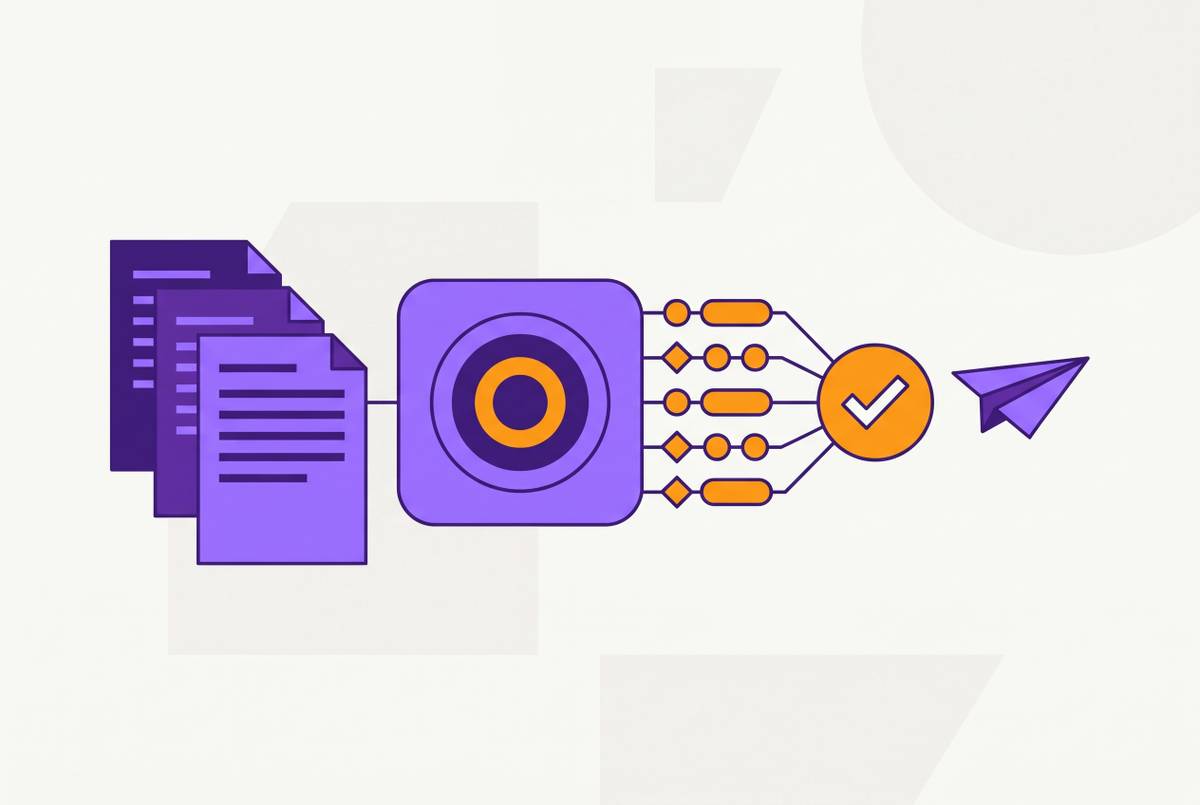
Start with companies, not fund names. Identify five to ten businesses similar to yours in stage, sector, geography, and business model that have recently closed a round, and treat their cap tables as your actual sourcing list. This inverts the usual approach, where founders start with a list of famous funds and work backward. Comparables first gets you to relevant investors faster, because the fund names fall out of the data rather than out of memory or reputation.
From there, pull deal history on each candidate fund and cross-check three of their stated recent seed deals against Crunchbase, confirming round size, date, and whether they actually led. Discrepancies between what a firm claims and what third-party data shows are the clearest available tell for a fund that's gone quiet or pivoted without updating its public presence.
Apply a four-filter screen before spending more time on any single name. Is your company's sector one where the firm actually deploys capital? Does its trailing 12 months of activity confirm checks at your stage? Does its behavioral check range, not its marketing range, match your round size? And does it show repeated investment in your category, rather than one exploratory bet three years ago that never got followed up on?
Finally, separate lead behavior from participation behavior. If your round needs a lead, only count firms that show multiple lead positions in the past year. A fund that shows up in round after round but never leads is worth having on the list, just not at the top of it: it's a follow-on target, not the anchor investor your round is structured around.
Using co-investor graph data to find warm introduction paths
Roughly 58% of VC deals originate through professional networks, co-investor referrals, or introductions from an existing portfolio company. Co-investor graph data affects how founders should prioritize their outreach, and it predicts deal flow more reliably than a well-written cold email.
The mechanics are straightforward. Pull a target firm's co-investor list, which PitchBook surfaces directly (Signals.VC again offers a clean example, with 55 listed co-investors including Speedinvest). Then check that list against your own network for a first-degree relationship, or failing that, a plausible second-degree one. A warm introduction from a co-investor who has already sat across the table from the target fund's partners carries weight a cold email structurally cannot, because that introducer has already survived diligence with them once.
Timing compounds the effect. Founders who target funds based on recent deal-activity patterns, rather than pitching cold off a static list built months earlier, see meeting conversion rates roughly three times higher. Funds that just closed a deal in your sector are, by definition, holding fresh thesis conviction, and that's exactly the moment to be in front of them, not six months later once the enthusiasm has cooled.
None of this works if it starts during the raise itself. The window between the first outreach to build a relationship and getting a credible, warm introduction can be considerable for most paths into a fund. Co-investor graph research belongs in the fundraise prep phase, done well before the round opens, so the warm paths already exist by the time they're actually needed.
The signals that disqualify an investor before you send the first email
Some signals exist purely to save a founder from wasting a message. A fund with zero deals at your stage in the trailing 12 months, regardless of what its site says, has effectively exited that stage, and no amount of a well-crafted pitch changes that fact. A fund whose portfolio sector concentration sits entirely outside your category, one exploratory bet three years ago notwithstanding, is not a thesis match no matter how the partner's bio reads on a professional networking profile.
Check size mismatch disqualifies fast too. If disclosed round data shows a fund never leads and never anchors more than a small fraction of a round's total, treating them as a lead prospect wastes a slot that should go to a firm whose behavior actually matches that role. And a co-investor graph with no path back to your network, no first-degree or plausible second-degree connection anywhere in the list, means a cold email is genuinely the only option left, which is fine, but it's worth knowing that going in rather than assuming a warm door exists where the data shows none.
None of these signals require guesswork. They sit in the public record, waiting to be filtered, and the founders who filter them before the raise starts are the ones who walk into a meeting already knowing the fund on the other side of the table is actually capable of saying yes.