Managing Parallel Investor Conversations Without Losing Momentum
Treat investor conversations like a sales pipeline to keep multiple deals moving simultaneously.
Fundraising in 2026 is a pipeline management problem. Founders who track investor conversations the way a sales team tracks accounts, with defined stages, owners, and next actions, keep multiple deals moving at once. Founders who wing it lose control the moment more than four or five conversations are live simultaneously, and the round can go quiet before the problem becomes visible. This piece breaks down why that discipline matters more this year than in any recent cycle, and what running it actually looks like in practice.
Managing parallel investor conversations in the hardest environment in years, 2026
Capital has split into two markets wearing one set of headlines. A handful of mega-rounds pull the aggregate numbers upward, which makes the environment look healthier from a distance than it feels to a founder actually raising. Fewer seed rounds are closing, but the ones that do close pull in larger checks, so the companies that clear the bar get rewarded disproportionately against the ones that don't. That's a market getting more selective, not a market correcting itself. That's a market getting more selective at exactly the moment founders need it to be forgiving.
The early stage absorbed most of the compression. Pre-seed through Series A made up a large share of named-stage deals by count in the first quarter of 2026, but that volume of deals accounted for only a small fraction of total capital deployed. Deal count looks normal on paper. The dollars tell a different story.
AI concentration sharpens the picture further. A dominant share of global startup capital in recent quarters has flowed to AI-focused companies. That doesn't just squeeze non-AI founders competing for what's left, it raises the bar for AI founders too, who now pitch investors that have sat through dozens of similar decks that same month and gotten faster at saying no. Every founder, regardless of sector, is negotiating with a more selective, more fatigued audience than existed two years ago. Pretending otherwise is the first mistake.
Why most founders run "parallel conversations" wrong
Most founders build a long contact list, fire off a wave of outreach, and react to whatever comes back. Three years ago that approach worked fine. Broad databases and high-volume cold sequences still generated enough replies to fill a pipeline. That math has broken. Investor inboxes are saturated with undifferentiated pitches, and the returns on generic outreach have eroded accordingly.
Parallel conversations done wrong looks like forty or fifty investors in some stage of contact, most of them poorly matched to the company's stage or thesis, founder time stretched thin across all of them, personalization sacrificed because there's no time to do it forty times over. No single conversation has enough attention behind it to advance. The pipeline looks busy and produces nothing, which is worse than looking thin, because it hides the problem from the founder running it.
Parallel conversations done right is narrower, and more deliberate. A defined cohort of well-targeted investors, active at the same time, each one aware, implicitly or explicitly, that the process is moving. That awareness is the entire point. It's what turns "interested" into a term sheet, because competitive pressure does something that a good pitch alone cannot.
Building the right target list before running any parallel process
List quality beats list length, full stop. A ranked target list built around real thesis fit consistently outperforms a scraped database of far more names. Every hour spent on a badly matched investor is an hour not spent on one who could actually write a check, and that trade never favors the scraped list.
Tier the list, because tiering is what makes this operational instead of aspirational. The top 20 are the dream investors, the ones a founder only approaches once the story has been sharpened and tested under pressure. The middle 40 are the realistic conversion targets, the core of the actual parallel process. The bottom 40 exist as warm-up reps, deliberately used to pressure-test the narrative before the top-tier meetings begin.
Segmentation has to happen before any outreach goes out, not after the first round of replies comes in. Group investors by check size, sector focus, and stage preference, because that grouping is what makes personalized messaging possible at scale rather than a one-off exercise repeated by hand every time. Stage-matching in particular isn't cosmetic. Seed rounds are typically built around a lead check surrounded by three to five co-investors, filled out by angels, micro-VCs, and family offices. Series A is dominated by institutional VCs running longer diligence timelines with different board expectations. Treating those two investor pools the same way is a structural mistake made before a single email goes out, and it's one of the more common ones.
Sequencing the outreach: how to stage conversations so momentum compounds
The bottom-40 tier isn't there for volume. Running those conversations first means a founder walks into top-20 meetings having already heard, and answered, the objections that come up repeatedly, rehearsal with real stakes attached rather than wasted motion. That's rehearsal with real stakes attached, not wasted motion. That's rehearsal with real stakes attached.
The active window matters as much as the target list does. Core conversations need to run within a compressed period, not drip out across six months, so term sheet discussions happen in parallel rather than strung out one after another. A slow, sequential round sends its own signal, and it's not a flattering one: a drawn-out process raises doubt about traction or story, whether or not that doubt is warranted.
Competitive dynamics do the heavy lifting once the sequencing is right. When investors know, even implicitly, that others are evaluating the same company at the same time, the incentive to move fast goes up. Speed becomes a signal in its own right. A founder who runs a decisive process is telling investors something about how the business gets run day to day, and investors extrapolate from that far more than founders tend to assume.
The operational backbone: what a functional investor pipeline tracks
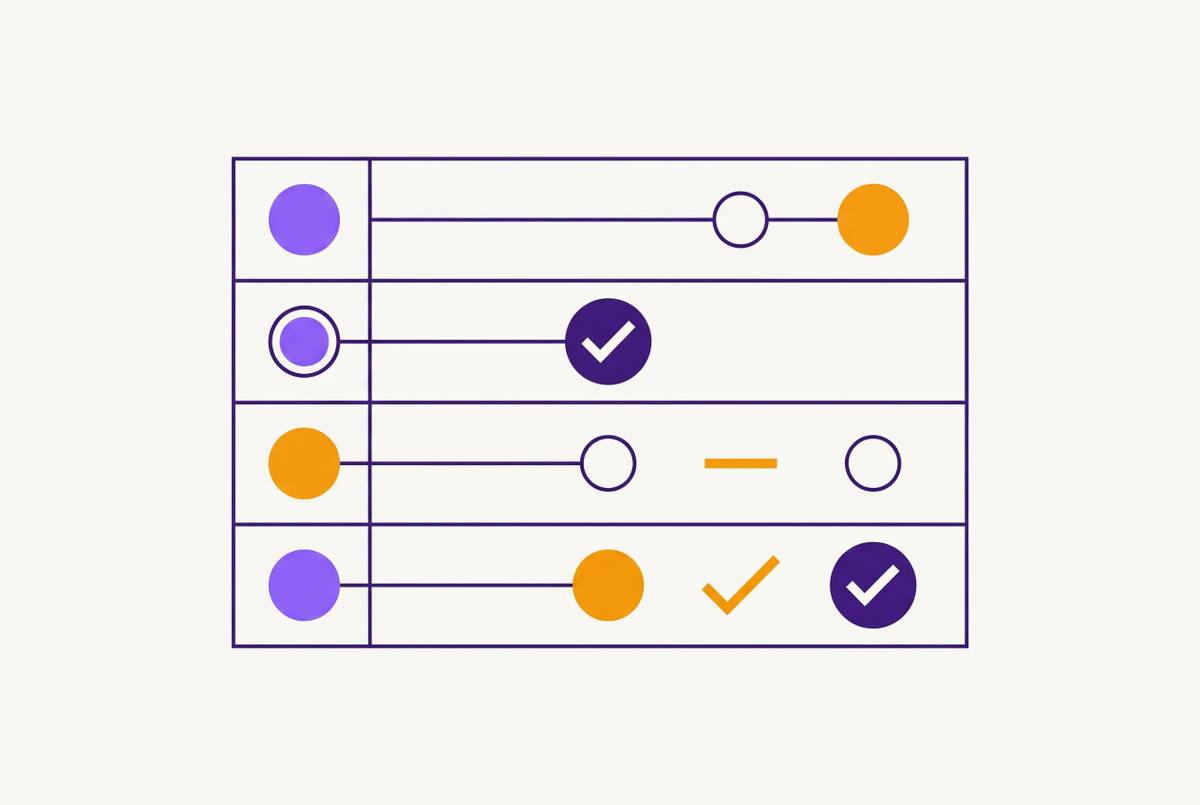
The investor pipeline worksheet is the system that makes all of the sequencing above actually work. One view covering every active relationship: which firm, what stage of the process, when the last touchpoint happened, expected check size, what needs to happen next.
Each record needs specific fields, not vague notes scribbled after a meeting. Firm name and lead partner. Current stage, whether that's first contact, intro meeting, partner meeting, term sheet, or closed. Date of the last touchpoint, and what was actually sent or discussed there. What's currently owed to that investor: a data room link, a customer reference, or an answer to a follow-up question. The next action, who owns it, and by when. Likely check size. A thesis-fit note explaining why this investor made the list in the first place and what they specifically care about.
That pipeline is also how a founder tells the difference between a conversation that's moving and one that's quietly dying. Positive signals look like detailed questions about the business model, requests for more data, introductions to other partners at the firm, questions about timeline. Stalling looks like delayed replies, vague non-answers about next steps, and silence after materials get sent. A founder tracking this in a spreadsheet catches the pattern within days. A founder tracking it in their head catches it two weeks too late, or misses it completely.
Term sheets deserve the same discipline. In the second quarter of 2025, per Cooley, 98% of deals used a 1x liquidation preference, 95% were non-participating, and veto rights were present in more than 90% of rounds. Knowing those defaults cold means a founder can read a term sheet in minutes and separate what's standard from what's a red flag, instead of burning days on negotiation that kills momentum across the rest of a parallel process.
Follow-up cadence: the discipline that keeps conversations from going cold
Speed of follow-up after a meeting is a signal, not a courtesy. A founder who responds promptly looks organized. A founder who consistently lags looks disorganized, and disorganized founders don't get term sheets, regardless of how strong the underlying business actually is.
A strong follow-up has three parts: the materials the investor actually asked for, sent within 24 hours; the specific proof points the investor reacted to in the room, restated back to them; and a clear next step with a specific ask attached to it.
Cadence has to stay deliberate without tipping into pestering. A conversation gone quiet needs a touchpoint, and that touchpoint needs new information attached, a new data point, a customer reference, a milestone update, rather than a bare "just checking in." A founder who sets the pace of follow-up is directing the process instead of reacting to an investor's calendar, and that's where narrative control actually lives. In a parallel process, where investors are often watching how the round is going even when they never say so out loud, that pacing carries even more weight.
Managing the investor narrative consistently across many simultaneous conversations
Volume creates drift. Talk to enough investors and it gets tempting to bend the story toward whatever the last one seemed to care about, over-indexing on one pet concern until the pitch starts contradicting itself from meeting to meeting. Investors talk to each other constantly. Inconsistency gets noticed fast, and it costs credibility faster than a weak metric ever would.
Keep the core narrative fixed, including the thesis, the TAM framing, and the competitive positioning. Let only the emphasis shift. Which proof points lead, which data gets surfaced first, that can and should change by audience. The underlying story stays exactly the same across all of it.
This is where the earlier segmentation work pays off a second time. The same deck structure runs across every pitch, but the lead evidence changes based on what that investor segment weighs most heavily, growth rate, margin structure, or team depth. The pipeline itself enforces the discipline: meeting prep and follow-up messaging get pulled from the thesis-fit note attached to each investor record, rather than relying on memory of a conversation that happened three weeks and fifteen meetings ago.
Parallel conversation counts implied by the current round benchmarks
The numbers dictate pipeline size and structure directly, not as a rough guideline. Median seed rounds in 2026 landed at $3.2 million with average post-money valuations around $24 million, built around that same lead check ranging up to several times a substantial base amount, surrounded by three to five co-investors. A seed founder isn't looking for one yes. A founder is assembling a full syndicate, and the parallel pipeline has to be sized to fill four or five slots, not to close one relationship and call it done.
Series A tells a more uneven story. Median post-money valuation hit $78.7 million in the fourth quarter of 2025, up 37% year over year from $57.5 million. But the gap between the median and the top quartile widened even further over that same period, so the headline growth number flatters most founders more than it describes them. A pipeline built for Series A has to expect more misses than hits and size itself accordingly. It needs more names on the list, not fewer.
The gap between rounds compounds all of this. The median wait between seed and Series A now runs 774 days. Seed-stage pipeline discipline isn't just about the seed round itself, it directly shapes what evidence a founder has in hand two years later when Series A conversations start. That evidence bar is specific: investors in 2026 want ARR reaching up to a few times over a substantial baseline at minimum, with top-quartile founders clearing well past that range, year-over-year growth above 100%, a team of eight or more, and a repeatable customer acquisition motion already running. Without that, no amount of pipeline discipline makes a Series A process credible.
AI-powered tooling and pipeline discipline in practice
The bottleneck in every fundraise has historically been research: figuring out which investors actually fit, personalizing outreach for each one, tracking behavioral signals, prepping for every meeting individually. That work doesn't scale by hand past a certain number of conversations. Most founders' parallel processes fall apart somewhere around conversation fifteen or twenty, right when the spreadsheet stops being enough.
AI-native tooling has started closing that gap. Investor discovery, thesis-level personalization, and meeting prep, work that used to require a full-time associate or an experienced CFO running the process, now compress into workflows a solo founder can run directly. Crunchbase's AI-powered search and investor recommendation tools, for instance, help founders identify relevant investors faster using portfolio analysis and funding trend data, which sharpens the target list before a single email goes out. That kind of tool stops short of managing the outreach and tracking that follows. The gap still sits there for most founders.
Platforms that combine investor intelligence with CRM functions, outreach sequencing, and meeting prep in a single workflow are what let a founder run the scale of parallel process the current market actually demands. That combination keeps every investor conversation current, rather than leaving a founder managing eighty relationships in a spreadsheet that goes stale within a week.
The specific points where parallel momentum breaks down
Momentum dies at predictable points, not random ones, and each one has a mechanical fix rather than a mindset fix.
The first is the post-meeting gap. A founder walks out of a strong meeting, gets busy, and the follow-up slips from same-day to three days to a week, by which point the investor's attention has already moved to the next pitch in their inbox. The fix is mechanical: follow-up materials go out within 24 hours, no exceptions, tracked as a pipeline action with an owner and a date attached.
The second is narrative drift under volume, where the twentieth pitch of the month sounds meaningfully different from the third. That gets caught by discipline around the thesis-fit note, not by memory, because memory fails at pitch twenty.
The third is the stalled-conversation blind spot. A founder assumes silence means the investor is just busy, when it usually means the deal is dying quietly in the background. Tracking last-touchpoint dates against defined thresholds, rather than trusting a gut feeling about who's still engaged, is what surfaces this before it's too late to do anything about it.
The fourth is uneven pacing across the syndicate. A founder gets one enthusiastic lead moving fast while the rest of the round drags behind, and that mismatch itself becomes a reason for the lead to hesitate. Compressing the outreach window at the start keeps this gap from opening.
Each of these breakdowns traces back to the same root cause: a process that lives in a founder's head instead of in a system tracking stage, timing, and next action for every relationship at once. Fundraising in 2026 rewards founders who treat it that way, and it punishes, quickly and visibly, the ones who don't.