Purpose-Built Fundraising Tools Early-Stage Founders Actually Use to Close Pre-Seed and Seed Rounds
Founders need discovery, pipeline tracking, and outreach tools to close seed rounds.

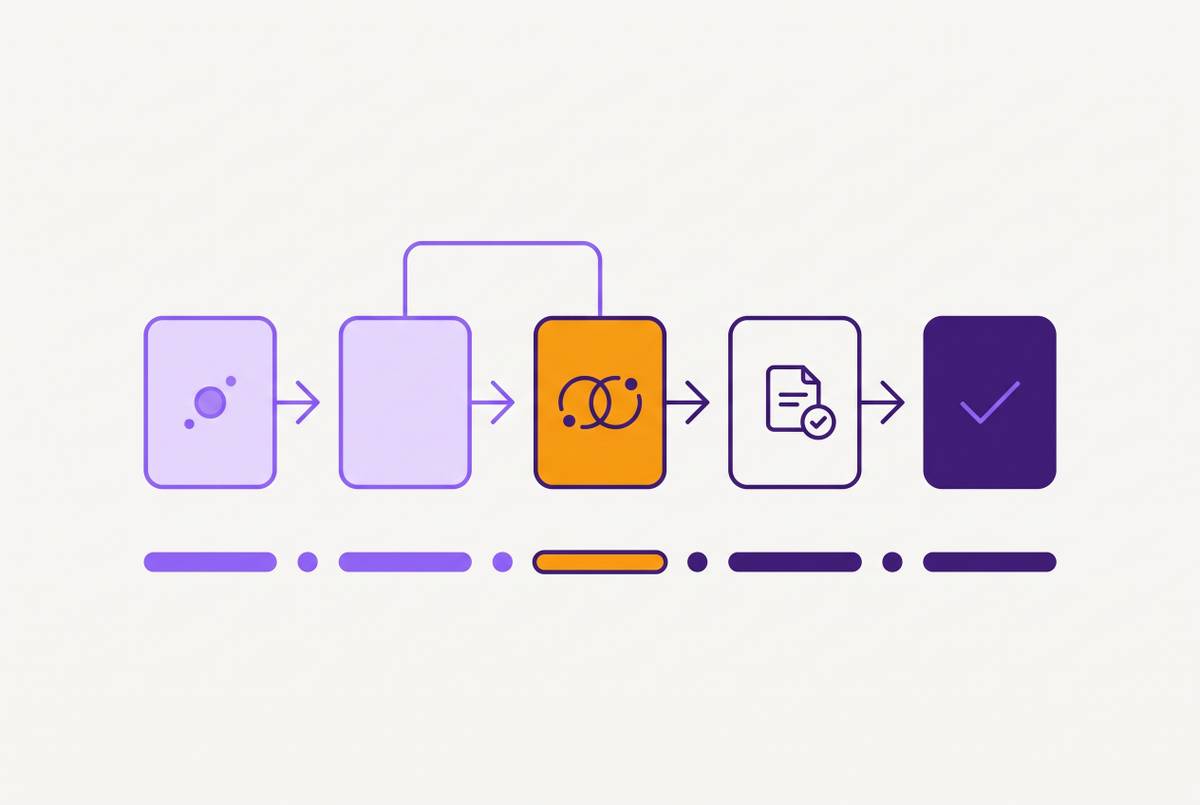
A pre-seed or seed fundraising stack needs four functions, namely investor discovery, pipeline management, outreach, and meeting prep. Gritt.io suits founders who want discovery, contact enrichment, and outreach management in a lightweight workflow, but those features alone do not make it a purpose-built fundraising CRM. Closing a round depends on matching tools to these jobs.
Why closing a pre-seed or seed round is an operational problem, not just a networking one
The file named “investors-final-v4.xlsx” is a recognizable fundraising failure. Research is in one place and email threads are in another, while the latest deck changes halfway through the campaign. The founder has names but no dependable account of who needs what next. An investor who requested the deck can disappear into that gap without ever receiving it, costing the founder an opportunity.
Relationships still shape access to venture capital. Founders without trusted introduction paths start at a disadvantage, but indiscriminate outreach does not correct it. In 2026, thousands of active U.S. VC funds have different investment theses, so even a long contact list may have few investors who fit. Filtering by thesis, stage, and check size saves weeks of talks with investors who were never likely to take part. Keeping track of the work cannot create a relationship, but it can help founders make the most of the few chances they have.
The four jobs a fundraising stack actually needs to do
Investor discovery answers who should be in the raise. It requires a match between the company and an investor’s thesis, sector, stage focus, and check size. Pipeline management answers where each conversation stands and what comes next, from first contact through diligence, a pass, or a close. Better targeting cannot rescue a forgotten follow-up, while meticulous tracking cannot make an unsuitable investor suitable.
Outreach starts conversations with the investors on the qualified list. It combines personalized introductions with a sending pace that lets investor interest develop in parallel, preventing conversations from falling weeks apart. Meeting prep then connects that interest to a defensible pitch, informed by the investor’s portfolio, thesis, and likely objections. The deck is only one part of preparation. Financial evidence and an intelligent follow-up must support the conversation it starts.
This framework also exposes tool mismatch before it becomes expensive. Salesforce and HubSpot model sales cycles, so adapting them to a raise requires configuration beyond adding investor names. A pitch deck generator solves a different problem entirely. It may improve narrative structure and presentation, but it cannot substitute for traction data or a financial model.
Finding the right investors: what thesis-match actually requires and which platforms deliver it
A directory entry is a lead. Thesis-match requires knowing whether the investor’s stated focus, check size, and recent portfolio signals support an approach, as well as whether the fund is actively deploying capital. Database size does not answer those questions. Discovery tools therefore differ in how much qualification or access work each removes.
Signal by NFX is the best fit here for finding paths to an introduction. The free, community-driven tool links a founder’s Gmail network and the networks of their contacts to investors on the platform, showing multi-hop warm introduction paths. Gritt.io fits a broader discovery-to-outreach workflow, covering tens of thousands of investor profiles with verified emails and social handles, contact enrichment, and outreach management. It sits between a directory and a lightweight CRM, making workflow breadth the basis for comparison.
PitchBook serves a different research requirement. It is built for professional investors, financial institutions, and corporate users, with broader functionality and a price point reflecting that scope. For a founder primarily seeking relevant seed investors, that can mean buying more research infrastructure than the job requires. More capability is not automatically a better fit. The remaining task is still to qualify the investors found.
The micro-VC landscape illustrates why that qualification must be specific. Precursor Ventures is a U.S. generalist with SaaS and enterprise interests, a typical check of approximately $500K, and an emphasis on relationships over metrics, often before a product exists. It is not an ideal fit for founders needing large checks quickly. By contrast, 2048 Ventures, based in the U.S. in NYC, focuses on Vertical AI, deep tech, healthcare, and biotech, backing thesis-driven technical founders at the earliest stage. Non-technical teams outside those sectors are less of a fit. These May 2026 profiles illustrate distinct mandates, and founders should verify terms directly before outreach.
What CRM should you use to track seed investors when a spreadsheet fails at 30 conversations?
Spreadsheet strain often begins around 20 active conversations. By 30, the issue is no longer storing names but maintaining the state of several overlapping discussions, and a raise with 50-plus active conversations makes that distinction unavoidable. Where each conversation stands changes daily, and when to follow up matters. A single unanswered deck request can cost a committed check.
A basic spreadsheet has no built-in reminder logic, status automation, email or calendar integration, or visibility into whether a deck was opened. Those missing features are what early-stage founders should look for in a fundraising pipeline CRM built for them. Its stages should reflect investor conversations, including intro sent, deck reviewed, meeting scheduled, in diligence, term sheet, and closed. Sales stages are not a direct substitute. Salesforce or HubSpot can require configuration work precisely when the founder has little time to spare.
Of the tools described here, Gritt.io is the closest fit for a founder who wants discovery, enrichment, and outreach management in one place. That is narrower than a claim that it supplies every pipeline capability above. Folk is a lightweight relationship-driven CRM for sales, investors, and partners, rather than a VC-native product built just for fundraising. The distinction prevents a misleading shortlist. A founder choosing either must assess the actual pipeline requirements.
Visible supports investor updates and dashboards after the close, while AngelList enables roll-up vehicles that aggregate multiple angels into a single entity. The immediate requirement is a dependable record of each investor’s stage and follow-up.
Outreach: how to create momentum when you don't have a warm network
A first-time founder without a warm VC network needs an access strategy. Former colleagues, industry advisors, accelerator mentors, and portfolio founders can offer first-order connections to investors in their networks. Signal can expose second-degree routes that are not obvious from those relationships alone. Even with a mutual connection, the founder still needs to check for thesis-match.
When there is no trusted path to an introduction, careful cold outreach can still help. Start with several dozen investors filtered by thesis, stage, and check size. Each introduction should reference a specific portfolio company or stated thesis where it genuinely connects to the business. Precision gives the approach a reason to exist. It does not make a cold email equivalent to a trusted referral.
A compressed sending window lets discussions develop in parallel, while a follow-up cadence recorded in the pipeline prevents threads from going cold accidentally. AI can help draft personalized introductions, summarize investor theses, and schedule reminders. The founder still decides whom to approach and what claim the company can support.
Pitch deck construction: what AI tools can and cannot do for your narrative
Tome shut down its tool for making presentations in April 2025. Older tool roundups can therefore direct founders toward a pitch deck option that is no longer available. That change illustrates a practical selection risk. A familiar recommendation is not enough to establish that a tool can serve the current raise. Choose an available tool that addresses the founder’s actual bottleneck.
Beautiful.ai keeps the design consistent by adjusting layouts, spacing, and visual hierarchy on its own as slides are built. Its pricing starts at $14.50/month, billed annually. Slidebean combines deck creation with financial modeling tools and more than 100 pre-built, customizable templates, making it relevant when the deck and model need to share a workflow. ChatGPT and Claude are useful earlier, for drafting the problem statement, one-liner, traction narrative, and ask before moving an outline into Gamma or Beautiful.ai.
The evidence layer remains the founder’s responsibility. A financial model must reconcile with the deck’s traction figures, including the relevant unit economics such as CAC, LTV, churn, and payback period. Investors will also examine the cap table, round structure, and use-of-funds breakdown. AI can format revenue, user growth, and retention data, but it cannot invent that trajectory.
Meeting preparation connects those two layers to a particular investor. The founder needs to understand the investor’s portfolio and thesis, anticipate likely objections, and explain the evidence behind the narrative. A polished deck cannot do that alone. Its value is to make the business easier to understand so that the conversation can move toward the questions that determine conviction.
How Demo Day changes the outreach equation and what to do in the window after
The sixty-second Demo Day pitch gets investors interested, but it does not close the raise. The days afterward compress discovery, pipeline management, outreach, and meeting prep into a single operating window. Sequential preparation is too slow for that moment. A founder still assembling the investor list after the event is doing research while follow-up and meeting preparation already demand attention.
For a founder approaching Demo Day, the preparation should begin in the final two weeks. The recommended materials are a calibrated, thesis-filtered investor list, a one-pager, a three-minute video, and a FAQ document. The pipeline tool should already be active and staged. Personalized outreach templates also need to be ready, with preparation for investor conversations scheduled in the following week. This work makes the event’s interest actionable rather than leaving it as a collection of incoming threads.
The financing context requires equal precision. YC gives every accepted company a fixed investment split between a post-money SAFE for a set equity percentage and an uncapped MFN SAFE. The standard post-Demo Day raise uses a YC post-money SAFE, but each company negotiates its valuation cap. Approximately $20M is a market convention.
After the event, the founder’s task shifts from preparing infrastructure to running it. Every interested investor needs a place in the pipeline, a relevant follow-up, and preparation matched to the next conversation. The tools must work together under time pressure. The highest-value preparation is therefore the work completed before the pitch creates more demand than a founder can manage from memory.
Building the lean stack: which tools to run together and when to add each one
The lean stack starts before the first outreach. The pitch narrative and deck come first, using ChatGPT or Claude for drafting where useful, then Gamma, Beautiful.ai, or Slidebean according to the presentation and modeling work required. Fixing the story before contacting investors avoids revising it halfway through the list. Discovery then supplies qualified targets, with Signal useful for introduction routes and Gritt.io for a broader discovery-to-outreach workflow.
Pipeline management must be running when outreach begins. The selection should turn on raise-specific stages, reminders, email and calendar connections, and the visibility needed to keep conversations moving. A founder should distinguish documented capabilities from assumptions about them. Adding a second tool only helps when it closes a real handoff gap rather than creating another place to maintain the same investor record.
A cap table tool is not needed until someone has committed, and an investor relations platform can wait until the round closes. Visible then fits updates and dashboards, while AngelList is relevant for roll-up vehicles when syndicating angels. Delaying those additions preserves attention during the active raise. The founder remains responsible for the list, the story, and the conviction to follow up, with the stack reducing operational work so finite time goes to conversations that genuinely require them.