What Founders Actually Give Up When They Adapt a Sales CRM for Fundraising
Abandoning investor intelligence and relationship continuity costs more than configuration time.
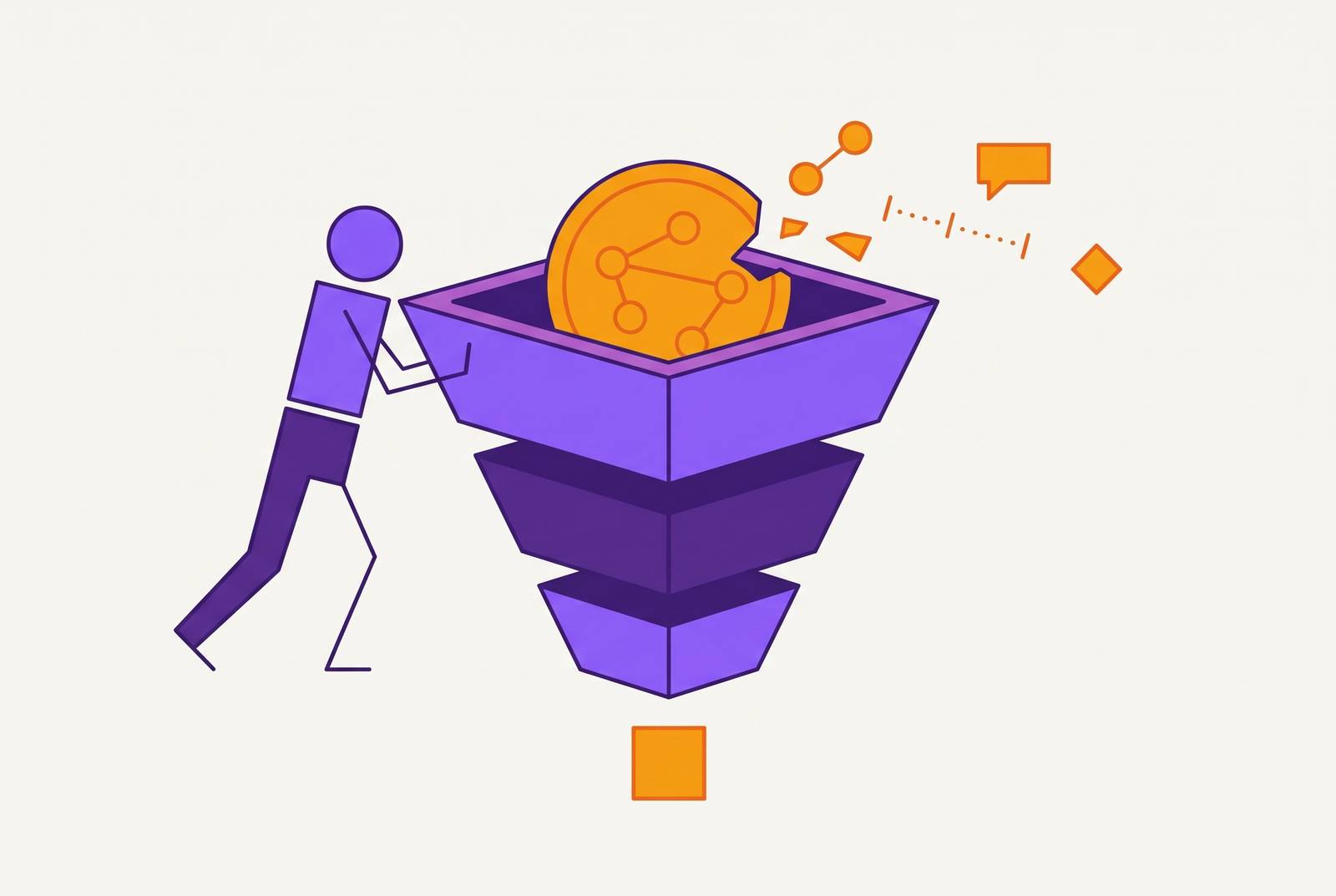
Adapting a sales CRM for fundraising costs more than configuration time. It can separate investor intelligence from pipeline activity, obscure the health of a raise, and break relationship continuity between rounds. The central trade-off is structural. A system built to move buyers toward a purchase is a poor fit for fundraising, where many investor relationships run at once and carry on across rounds.
Why fundraising breaks sales CRM logic at the structural level
With 40 investor conversations underway, the mismatch is visible in the work. One investor is approaching a partner meeting, another is in diligence, and another has passed on this round but remains relevant to the next. The founder is raising one round through dozens of parallel counterparties, each with its own decision process and timing. Renaming sales stages does not change that underlying model.
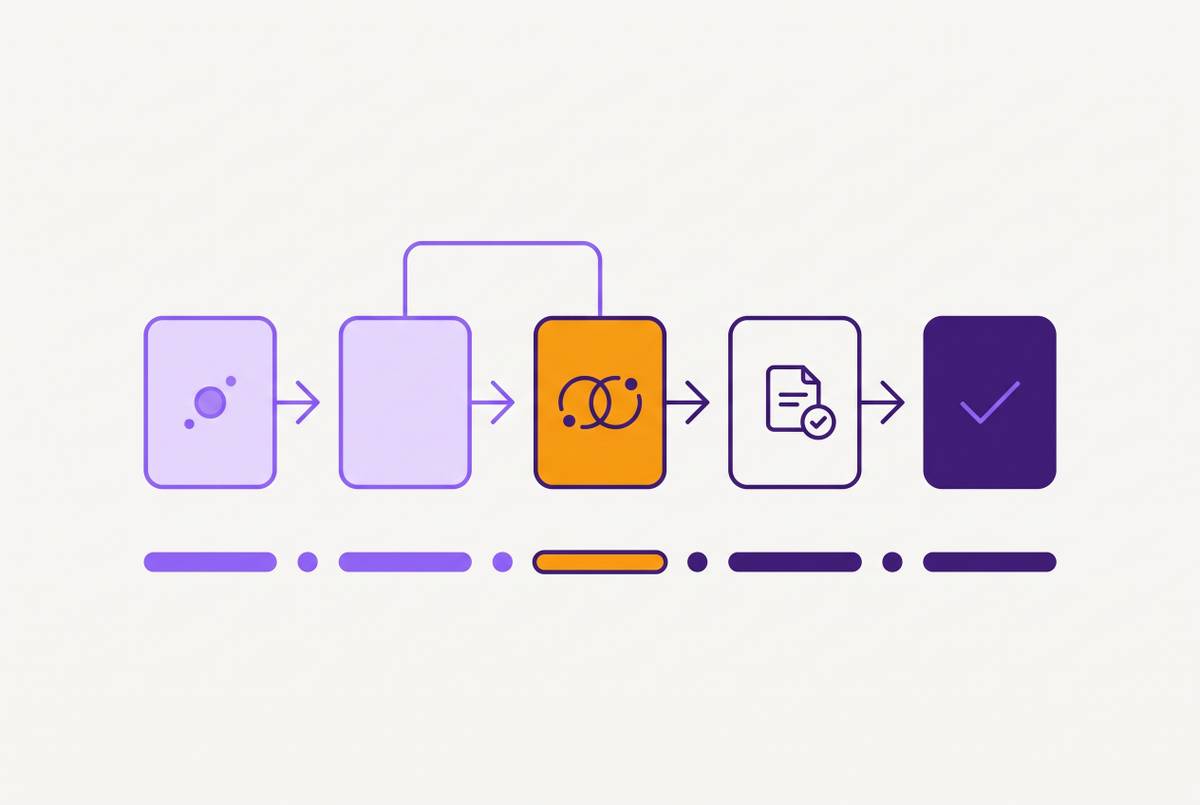
Sales pipelines assume progression from lead to opportunity to customer, with a clear terminal event. Investor relationships do not end so neatly. An investor who passes at seed may be the right lead for Series A, so a lost-opportunity record must preserve history that remains useful across years. Partner meetings, IC, and diligence also require meanings that generic sales stages do not supply.
Lead scoring and drip cadence logic favor the volume and velocity of a repeatable sales motion, while fundraising depends on relationship timing and interpretation of signals. When the tool makes one kind of activity easier to measure, that activity can become the priority. This can skew the work before a report looks wrong.
What investor pipeline visibility actually requires, and what a sales CRM skips
A partner asks for a deck already sent. Two teammates contact the same investor in the same week. These failures expose a gap between recording activity and seeing the state of a relationship. A fundraising pipeline needs to show what has happened, who owns the next interaction, and whether that interaction is moving the investor toward a decision.
That view must also reveal the health of the round. A founder needs to see that the top of the funnel went empty three weeks ago, or that twelve relationships remain at first meeting with no partner introductions scheduled. A populated pipeline can conceal a stalled raise. Without seeing how investors move from each stage to the next, the founder may learn too late that the current conversations will fall short of the planned close.
Sales reporting does not produce that interpretation natively. An export can contain the underlying records while still requiring the founder to reconstruct what they mean for the round. Closing typically requires more parallel conversations than founders anticipate, which makes the distinction consequential. A count of active contacts is not a measure of momentum.
Two co-founders need a shared understanding of who owns the investor relationship across introductions, meetings, and follow-up. A sales CRM configured for fundraising does not supply that meaning simply because it has an ownership field. Without a clear workflow for each relationship, outreach can be repeated or missed even when the database looks orderly.
The investor intelligence a sales CRM cannot hold
Pipeline stages show how far an investor has moved, but not how well that investor fits. A sales contact record is organized around a buyer, with a name, company, title, deal size, and close probability. An investor record needs check size range, stage focus, sector thesis, fund cycle position, partner dynamics, IC process, and prior relationship history across rounds. Those details shape both whom to approach and how to approach them.
Custom fields can store much of this information. Storage is not the same as actionable intelligence. A field containing “fund stage: Seed/Series A” does not, by itself, generate a useful view of whom to call this week based on fund cycle. The missing element is the connection between investor attributes and the work the founder needs to do next.
Warm introduction mapping exposes a related limitation. Identifying the strongest path from the founder’s extended network to a target investor requires a relationship graph. At seed, where warm introductions are still the main way in, that gap makes it harder to reach an investor in the first place. The record may describe the investor without revealing a route to them.
Crunchbase Pro and PitchBook serve investor discovery, but that research does not automatically become intelligence inside a live fundraising pipeline. The founder is left maintaining two systems. Moving information between them requires manual work, and under-resourcing that work leaves research detached from the relationships it was meant to inform.
Document engagement signals: the most actionable intelligence a sales CRM loses
An investor marked “in diligence” provides a useful status. An investor who opened the pitch deck three times in the past week, spent significant time on the team slide, and forwarded it to a partner provides a different kind of information. That activity gives the founder a basis for deciding when to follow up and what to discuss. The distinction is between a stage and a signal.
A sales CRM has no built-in fundraising support for deck tracking, data room access logs, and time-per-slide analytics. A founder may therefore know that a document was sent without seeing how it was used. Even when a separate tool tracks engagement, someone must link that signal to the relationship history. Collecting the signal is only useful if someone reads it in time to act.
Monthly or quarterly messages to current and prospective investors can reveal interest through open rates, click-through on metrics, and forward behavior. When a separate email platform holds those signals, they do not naturally inform the investor record. A prospective investor’s renewed attention can remain an email metric, leaving a reason for a conversation unused.
How stack fragmentation turns a configuration shortcut into a compounding cost
Each missing capability invites a reasonable workaround. A deck tracker supplies engagement signals, a separate data room handles permissioned sharing, an email platform sends updates, and a spreadsheet holds investor research. Individually, each addition solves a problem. Together, they distribute the context of one relationship across several places that the founder must reconcile.
The resulting cost extends beyond administrative effort. When a conversation spans six months, moves across three tools, and involves two co-founders, prior objections and commitments become harder to preserve as a coherent history. A partner meeting then depends on someone assembling that history correctly. The risk lies in both the quality of each tool and the handoffs between systems.
Reporting makes the maintenance burden especially visible. An existing investor or co-founder asks how the raise is going, and the answer requires reconstruction from several systems. Workflow automation may also need a more expensive CRM tier, and the other tools have their own costs. The option that feels familiar or looks cheap can therefore cost more than it seems to when first set up.
Staying with an existing sales CRM nevertheless has a legitimate advantage. Founders already using it for the core business face real switching costs and the overhead of operating another system. During a raise lasting months, with hundreds of thousands of dollars at stake per relationship, fragmented research affects outreach, detached engagement affects follow-up, and incomplete history affects partner meetings. Founders who stay with the system take on the work of filling those gaps throughout the raise.
Why these losses are most acute at the moments that define a round's outcome
Demo Day follow-up compresses these weaknesses into an urgent task. An investor who leaned in does not remain interested simply because the CRM has not surfaced the next action. With a 48-hour engagement window, taking too long to read the signals is especially costly. When the system does not flag the urgency of fundraising follow-up, the founder must track that timing and act on it elsewhere.
Most investor relationships also require multiple touchpoints before reaching a clear yes or no. A strong first interaction is not enough. When pipeline state does not drive a daily follow-up list, the required volume falls back on founder memory. Missed contact is therefore not merely a late administrative task, but a break in the process that moves interest toward a decision.
The Series A conversion bottleneck extends the same problem beyond the active round. Conversion has declined sharply compared with earlier cohorts, and only a fraction of seed-funded companies convert within two years. The longer interval increases the value of history with investors who passed at seed but could lead later. Treating the seed close as the end of those relationships strips context from the next raise. The operational frame must span rounds, even when the immediate pressure is to finish this one.
What a fundraising-native workflow actually provides instead
A fundraising-native workflow organizes the system around investors moving from identified through committed. It connects that progression to engagement signals, centralized document and data room access, investor updates, and history that remains available across rounds. Each activity goes into the same relationship record, so there is no extra piece to fit back into the history.
In that model, a deck re-open can trigger a follow-up reminder connected to the investor’s full history. The founder does not have to interpret an isolated notification and re-enter it into the CRM before acting. Investor-type differentiation also belongs within the workflow. Angels, micro-VCs, and multi-stage funds can have different stage logic, follow-up cadence, and reporting rather than being forced through one generic sequence.
Warm introduction mapping serves the same purpose at the start of a relationship. It surfaces the strongest path to a target investor as part of the work of building the pipeline. AI-native fundraising platforms also let founders search for investors by thesis, stage, sector, and fund cycle. Meeting intelligence can help founders prepare with details of prior investments, questions, and portfolio, while outreach automation does work that takes a lot of research. These capabilities support conviction-building conversations.
The relationship record must remain useful after commitment. Term sheet day starts the work of investor relations, with coordination still needed. A fundraising CRM that also supports IR can preserve contacts, update cadence, and engagement history without a migration at that point.
How to decide whether to adapt what you have or build a fundraising-native stack
The case for staying in a sales CRM is strongest while the relationship set remains small and the founder can manage the missing connections explicitly. Existing familiarity and switching costs are real benefits in that calculation. The choice is acceptable only with a clear understanding of what the system does not provide. Even with a familiar interface, founders still have to maintain investor-specific stages, keep track of engagement, and stay on top of follow-up.
The practical threshold is roughly 20 to 30 active investor relationships, where a well-structured spreadsheet also begins to lose its usefulness. Beyond that point, engagement fragmentation, investor-type differences, and relationship continuity become harder to manage through custom fields alone. The team must still be able to interpret and act on each relationship without reconstructing its context across tools.
For founders who stay in a sales CRM, the minimum additions are a dedicated deck tracking and document engagement layer, a permissioned data room, and a native investor update platform with engagement analytics. Those additions address the most dangerous blind spots. Integrating their intelligence into the CRM contact record requires ongoing custom work, a burden that belongs in the decision from the outset.
The timing of a change also deserves attention. Series A is the wrong moment to recover history that should have remained active since seed. Earlier engagement and update cadence are raw material for the next raise. The decision should therefore follow the requirements of fundraising as an operational discipline, rather than the convenience of software installed for another purpose. The cost of a poor fit may appear not on a budget line, but in a round that takes longer, closes smaller, or does not close at all.