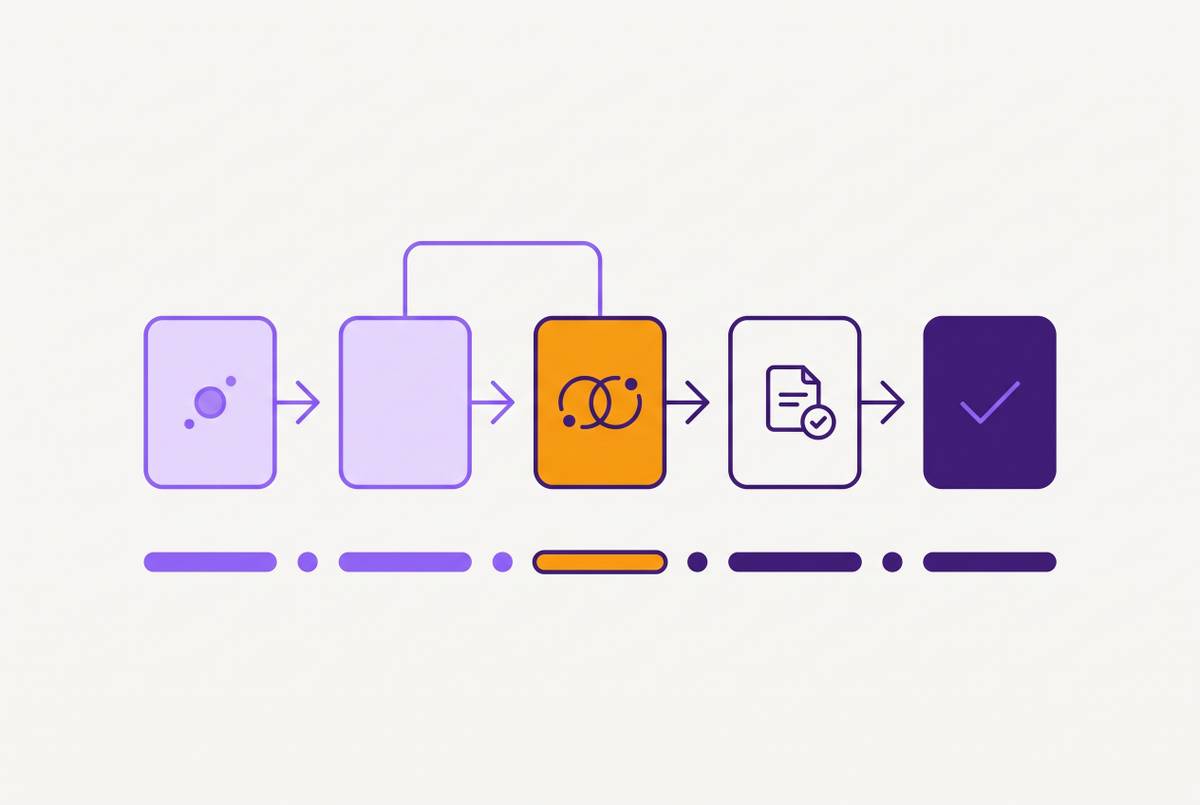
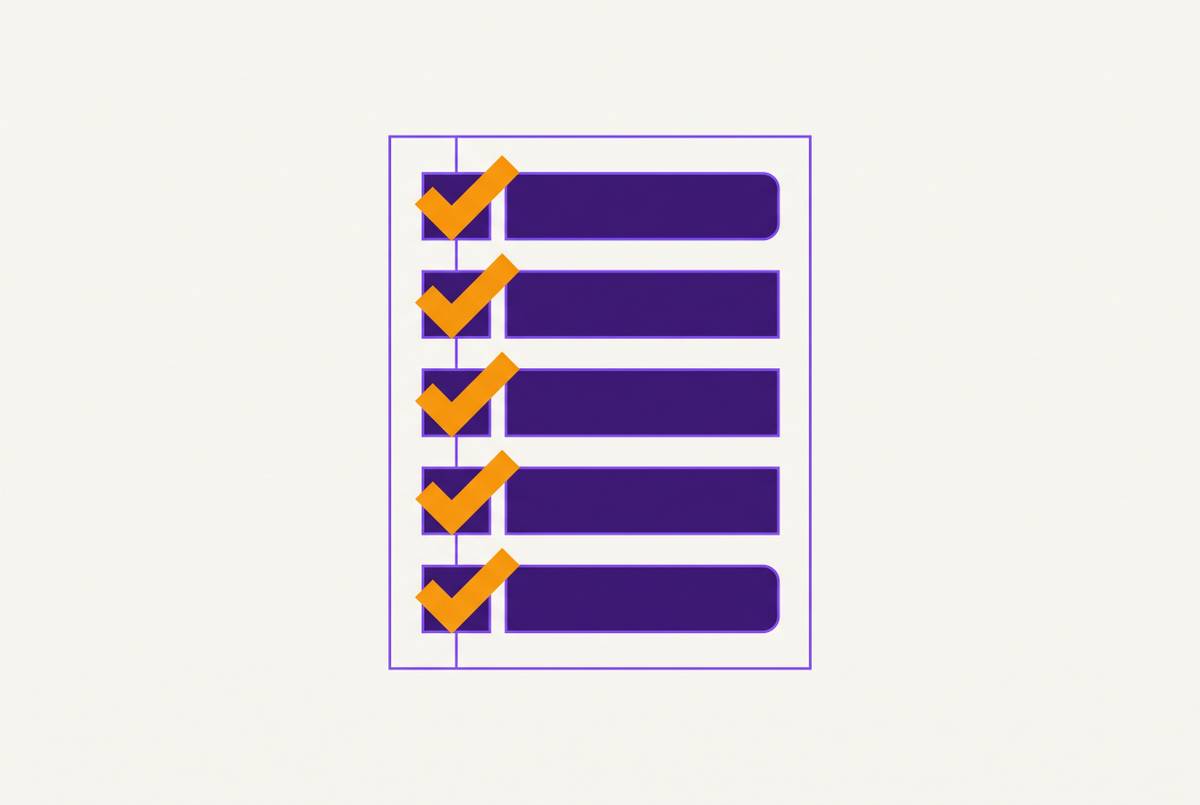
Fundraising Data Room Contents by Round Stage
Different rounds need different documents—too much looks amateur, too little looks unprepared.
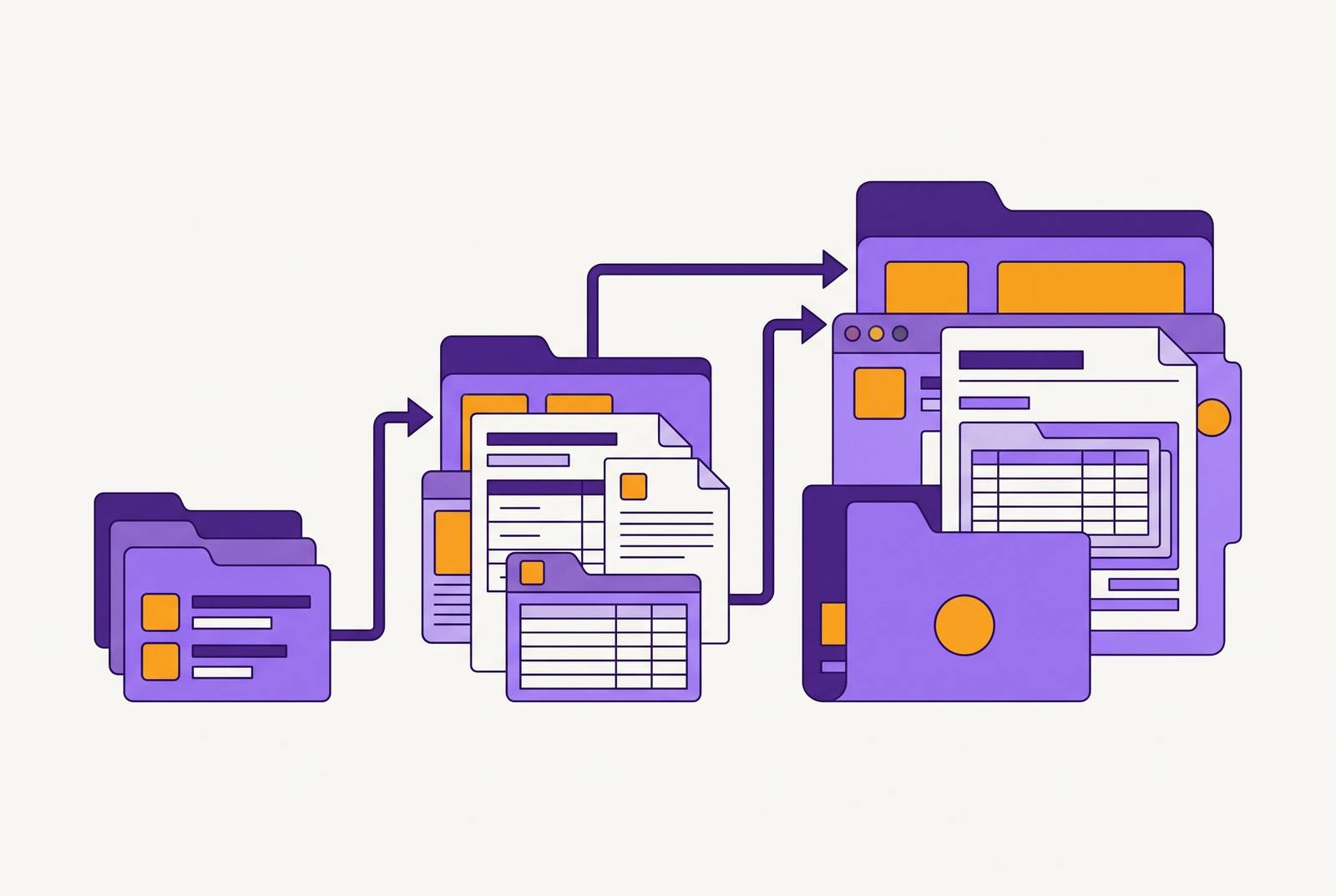
The contents of a fundraising data room change by stage, and treating them as a fixed checklist is the fastest way to signal the wrong thing to an investor. What belongs in a pre-seed room looks thin at Series A, and what belongs at Series A looks like overkill at seed. This piece maps the documents each stage actually requires, why the depth of evidence shifts as the company matures, and what gets flagged, for better or worse, when a founder gets the balance wrong. Fundraising Data Room Contents by Round Stage.
Data room signals are stage-specific, not a universal checklist
Over-documenting early and under-documenting late are the same mistake, just pointed in opposite directions. A Series A room that still looks like the deck that closed the seed round tells the investor the company hasn't done the operational work to earn the larger check.
Investors don't just read the documents in the room. They read the room itself, as a proxy for how the founder runs the company day to day, and disorganized documentation reads as an early warning that the operator will be difficult to work with over the life of the investment. That's a harsher read than most founders expect from a folder structure, but it's consistent.
The job of the room, at any stage, is to answer every diligence question in the investor's absence. If a document needs a phone call to interpret it, that document belongs in a management presentation. Fundraising is an operational discipline, not a paperwork exercise, and the data room is the most concrete artifact of that discipline. Founders who treat it as a filing task, assembled the week before a partner meeting, lose both time and credibility they didn't need to spend. A seed data room that looks like a Series A room signals founder inexperience with what investors actually need at that moment.
What a pre-seed room needs to contain
At pre-seed, the room is essentially five documents: the pitch deck, financial projections, the cap table, company formation documents, and whatever early customer validation exists, even if that's just a handful of warm signups or a pilot conversation. A more complete pre-seed room can run up to eighteen documents total, but beyond that range the additions stop reading as diligence readiness and start reading as noise VC Boom angelinvestorsnetwork.com Series A to E Funding Rounds: What Changes at Each Stage.
Investors at this stage expect certain things to be missing. Audited financials, signed customer contracts, formal IP assignment agreements: none of these are expected to exist yet, and their absence isn't penalized. What is being evaluated is whether the founder understands what's appropriate to have at this point in the company's life, versus what would be premature or, frankly, fabricated. A pre-seed deck carrying a GAAP-compliant income statement doesn't inspire confidence, it raises the question of what else in the room is dressed up beyond its actual maturity.
Transparency about the gaps matters just as much as the documents themselves. An empty folder, labeled honestly, answers an investor's question before they ask it. A missing folder just raises it. The pitch deck is doing most of the persuasive work at this stage, and the supporting documents exist mainly to confirm the founder is organized enough to be fundable, not to carry the argument on their own.
Cap table cleanliness is non-negotiable even here. Before an investor evaluates anything else, they need to see who owns what, and a cap table that doesn't reconcile with the SAFE or note documents sitting next to it is a red flag no deck can offset. A mutual NDA sometimes belongs in the room too, though whether to include it, and at what point to gate access behind it, is a judgment call founders make based on how sensitive the earliest materials actually are. Most pre-seed investors don't spend long deciding whether to keep going. The room's job isn't to overwhelm them with volume, it's to reassure them quickly that nothing here is going to be a problem later.
The seed stage room: eight to twelve documents that close or stall a deal
The seed room typically covers eight to twelve documents, including the pitch deck, a financial model, the cap table, incorporation documents, and early customer or product evidence. Across every stage, four documents get opened first, regardless of round size, and investor attention actually goes to the financial model, the cap table, the top customer contracts or earliest customer evidence available, and any litigation summary.
"Early customer evidence" at seed doesn't mean signed revenue contracts. Letters of intent, pilot agreements, usage metrics, and testimonials all count, and investors know what a seed-stage company can produce versus what a Series A company should already have on file. The financial model, similarly, isn't expected to be GAAP-compliant. It needs clear assumptions and internal consistency, a model where the unit economics tie back to the customer numbers in the deck, rather than a polished spreadsheet built backward from a valuation target.
IP assignment not being nailed down first appears here, in the earliest contributor agreements, and it's cheap to fix early and expensive to fix late. Founders and early contractors who wrote code before signing a formal assignment agreement leave a gap in the chain of title, and that gap is administrative if it's caught in week one of preparation, but becomes a price adjustment or an indemnity escrow if it is still uncaught by week six of exclusivity. Missing IP assignment agreements from founders are, by one measure, the single most common deal-delaying gap in early-stage diligence. It's a document nobody thinks about until a lawyer on the other side asks for it, and by then the leverage has shifted.
The stakes of getting this right are not abstract. Data cited from CB Insights puts incomplete or disorganized documentation as a primary factor in 68% of failed deals, and separate Harvard Business Review findings show that companies with organized data rooms close deals 35% faster. What seed investors are ultimately weighing isn't whether the room is complete in some absolute sense, but whether this founder is going to be a manageable partner for the better part of a decade. The median seed round takes three to six months to close, and a ready data room compresses that by 2–4 weeks (not a marginal improvement) (What Is a Data Room for Investors?. Contents, Costs + Top...).
The file-naming and organization layer that determines first impressions
Investors review many rooms in parallel, often in the same week, and a messy set of file names signals operational immaturity before a single document gets opened. A file called "Pitch_FINAL_v3_REAL.pdf" is a small thing, but it's the first thing an investor actually sees, and it tells them something about how this founder handles version control under pressure. The fix is boring and unglamorous: descriptive, dated, version-controlled naming, something like "2025_Q3_Financial_Model.xlsx," which isn't a stylistic preference so much as a visible signal of attention to detail saastr.com.
Folder architecture matters in the same way. A sensible structure discloses information progressively, matched to how much trust the relationship has earned so far. A public layer holds the pitch deck and company overview, accessible early in a first conversation. A basic confidential layer, gated behind email verification, holds financial highlights and team bios. A sensitive layer, gated with an NDA where appropriate, holds detailed financials, contracts, and the cap table itself.
A short "start-here" memo, paired with a guided reading order, turns the room from a pile of filed documents into something that argues the founder's thesis on its own terms. A master index removes ambiguity for diligence teams who join a process midstream and need to get oriented fast. And an empty folder labeled "Litigation, none to date" is more credible than no folder at all, because the absence of a category, unlabeled, raises the exact question that a named absence answers cleanly. Access management rounds this out: email verification, time-limited permissions, and activity tracking on which sections an investor actually opened aren't just security features, they're a read on what the investor cares about, which is its own kind of intelligence during a live raise.
The shift from signal to evidence at Series A
Only 20% of seed-backed companies ever close a Series A, and the room now has to carry the full weight of that selection process. Series A is typically the first priced equity round, with raises usually landing between $3 million and $20 million, led by an institutional investor who's going to negotiate real terms, take a board seat, and diligence the company accordingly intralinks.com Startup Funding Stages: Pre-Seed to Series E (2026). The cost of an incomplete room here is categorically different from the cost at seed.
What the Series A room adds, relative to seed, is actual evidence in place of a signal. Financial statements move from projections to something closer to GAAP-compliant. Customer evidence moves from letters of intent to signed, executed contracts. IP assignments, which were merely advisable at seed, become non-negotiable here, covering every founder and every contractor who's touched the codebase. Twelve months of MRR, CAC, LTV, and retention data now need to be on the table, because that's what makes the growth story in the deck verifiable rather than asserted. Board minutes and written consents covering every major decision since incorporation belong in the room too, along with a hiring plan that carries strategic rationale, and foreign qualification filings if the company operates in multiple states.
The financials folder is where the actual diligence happens at this stage. The pitch deck gets the founder in the room; the financials folder decides if they stay. The good news is that founders generally have time: the median gap between seed and Series A runs around 616 days, or roughly 2.1 years, based on 2025 data saastr.com. That's enough runway to build the evidence base properly, provided the work starts early rather than in the six weeks before the raise opens. By the time the room is live, a partner at the fund should be able to pass it to legal counsel and financial analysts without a single follow-up request. The six sections every Series A data room needs:. Pitchwise's Series A fundraising analysis found that founders who haven't resolved cap table issues, IP ownership questions, or formalized key agreements can add 4 to 8 weeks to their diligence timeline.
The cap table as a continuous thread across all stages
The cap table sits among the four documents opened first at every single stage, and its evolution matters, because the document itself never disappears, it just gets heavier. At pre-seed, it's simple: founders, maybe a few angels, possibly a SAFE or convertible note outstanding. At seed, prior financing documents, the SAFEs and convertible notes from earlier rounds, need to sit alongside it, because the fully diluted picture has gotten more complicated and has to be presented clearly rather than reconstructed by the investor from scratch.
At Series A, the cap table picks up company around it: stockholder agreements, voting agreements, rights of first refusal, and the ESOP plan all appear together, because the incoming investor is taking a board seat and needs the full governance picture, not just the ownership percentages. A cap table that's messy at this stage, one with unreconciled grants or missing consents, suggests the founder hasn't been running the company with the rigor an institutional investor requires. A related and surprisingly common problem appears in the legal foundations folder around the same time: companies incorporated in Delaware but operating in California without ever filing a foreign qualification, a fixable issue, but one that creates cleanup work that delays closing when it is caught late.
The option pool deserves its own mention. ESOP plan documentation and grant records become a genuine requirement at Series A, because investors are going to model dilution themselves, and they need accurate inputs to do it. Series A rounds typically carry 18 to 22 percent dilution, with the lead investor acquiring roughly a fifth of the company, and the cap table is the single document that makes that math transparent and checkable VC Boom angelinvestorsnetwork.com Series A to E Funding Rounds: What Changes at Each Stage. Get it wrong, or leave it messy, and the investor's model won't match the founder's story, which is its own kind of red flag.
Series B diligence resembling M&A
The Series B stage is also getting more competitive on the capital side: $7.1 billion went into Series B rounds in the first half of 2025 alone, a 33% increase over the prior year, reflecting growing institutional appetite at this stage saastr.com Series A to E Funding Rounds: What Changes at Each Stage.
Audit-ready or audited financial statements are expected. Monthly variance analysis, comparing actuals against plan, becomes standard. Cohort retention data, vintage by vintage, replaces aggregate retention figures that used to be good enough. Board minutes now span a longer operating history, and ESOP detail and option grant records need to be complete and reconciled. Detailed operational reports across every business function, a revenue-by-customer and cohort export, and a debt schedule with covenants, if any debt instruments exist, round out the folder.
Part of what's driving this shift is who's actually in the room. Crossover funds, the ones holding both public and private positions, have become a primary anchor investor type at Series B, and they run diligence that looks a lot closer to public-market analysis than the kind of pattern-matching a traditional early-stage VC does. Founders who show up leading with a narrative deck and burying the numbers several folders deep are optimizing for the wrong audience at this stage. Crossover diligence moves fastest on ARR cohorts, net retention curves, and unit economics that are sitting in the room already, presented without anyone having to ask for them. A sell-side M&A room can run to many hundreds of documents, and a Series B room holds far fewer, but both get worked by legal, tax, and commercial teams simultaneously, on parallel tracks. Sector shapes what gets emphasized inside that structure. Series B typically raises $20M–$60M (median roughly $30M) at a $100M–$300M post-money valuation, and the capital at stake means diligence is correspondingly more rigorous (intralinks.com, angelinvestorsnetwork.com, Startup Funding Stages: Pre-Seed to Series E (2026)). Series B requires proof of PMF and unit economics: typically $5M–$15M ARR before investors will engage seriously (crv.com, Startup Funding Stages: Pre-Seed to Series E (2026)). What the Series B room adds that the Series A room doesn't carry:. Context from the broader market shows AI companies captured 65% of all venture value in 2025, up from 46% the prior year (sector matters to what metrics the room emphasizes, not just what documents it contains).
The omissions and excesses that send the wrong signal at each stage
Some mistakes are stage-specific, because they recur. At pre-seed and seed, the recurring failure is a cap table that doesn't reconcile with the SAFE documents sitting next to it, an inconsistency that a first-year analyst catches in minutes. At seed specifically, the classic gap is an IP assignment missing from an early contractor who's since left the company, invisible until someone goes looking for it. At Series A, the tell is a room that still looks like it closed the seed round: projections with no metrics history behind them, no signed contracts, no IP assignments on file, all of which signal the company hasn't grown into the round it's asking for. At Series B, the list gets sharper still: no cohort data, no audited financials, no variance analysis. Any one of these can stall a crossover fund's process entirely, not just slow it down.
Excess carries its own signal, and it's just as damaging as absence. A room with 140 files, no folder structure, and inconsistent naming doesn't read as thorough, it reads as chaotic, and volume without structure communicates the opposite of what the founder intended. The corrective, at every stage, is the same one covered earlier: a short guided reading order that shows the founder has thought about the investor's experience moving through the room.
One consistent principle produces all of it: investors are diligencing the founder as an operator, not just the business on paper, and the organization of the room is the very first piece of evidence they get to work with.
Building and maintaining the room before the raise begins
None of this works if the room gets assembled the week a raise opens. Fundraising is an operational discipline, and the data room is its most visible expression. It has to be maintained on a schedule rather than built reactively under deadline pressure. Updating it monthly during an active raise, and quarterly during the quieter stretches of ongoing investor relations, keeps the four core documents current enough that nothing in them contradicts what's in the deck.
The founders who start early are the ones who get the roughly 2.1 years (616 days) the seed-to-Series-A gap actually offers, using that time to build the evidence base the Series A room requires saastr.com. The room a founder builds before the raise begins is, in the end, the same room the investor will use to decide what kind of operator they're actually funding.
Sources
- What Is a Data Room for Investors? Contents, Costs + Top ...
- The 18 documents that belong in a seed data room · VC Boom
- Series A to E Funding Rounds: What Changes at Each Stage
- Startup Funding Stages: Pre-Seed to Series E (2026)
- The Investor Data Room Checklist: Seed vs Series A (2026)
- CRV | Seed Funding vs. Series A: 8 Key Differences