Limitations of AI in Venture Fundraising Processes
AI research and prep tools save time, but investor-matching output needs human verification.
That number belongs to a different market than the one most founders are raising in, and treating it as a benchmark for a seed or Series A round is a mistake made before a single investor meeting is booked.
Why record VC numbers mislead most founders
Strip out the mega-rounds that produced the Q1 2026 headlines. What remains, spread across thousands of smaller deals, looks a lot like prior quarters. The "record market" described in the press is a story about four companies and the handful of funds large enough to write nine- and ten-figure checks into foundation model labs and autonomous vehicle companies. Fewer checks are being written by fewer investors, even as the aggregate dollar figure sets records.
A founder who sets round size, valuation expectations, or process timeline against the aggregate headline is competing against a benchmark that does not apply to them. The real clearing market for seed and Series A rounds is smaller, slower, and far more compressed than the quarterly press release suggests. That gap between headline and reality is what makes the rest of a fundraising process consequential: if the market is this unforgiving to founders who miscalibrate, what does a disciplined process actually demand? Increasingly, the answer involves AI tools, and increasingly, founders are misjudging what those tools can and cannot do for them.
What AI tools do well in fundraising
AI has earned a real place in fundraising work, and the place it has earned is specific: the research-heavy, repeatable tasks that eat founder time without building any relationship on their own. Investor discovery at scale is the clearest case. Parsing stage, sector, geography, check size, and portfolio signal across a large universe of funds is faster and more thorough with AI assistance than it is by hand, and no founder should be building that first list from memory and cold spreadsheet work when a tool can compress days into hours.
Outreach drafting and cadence management are close behind. Generating a first-draft personalized email, tracking who needs a follow-up and when, and keeping a long investor list from going stale in a forgotten tab are mechanical tasks, and AI handles them without any drop in quality. Deck assembly benefits the same way: AI tools speed up slide sequencing, layout, and visual consistency, which frees a founder to spend that saved time on the parts of the deck that actually require thought. Meeting preparation rounds out the list. Surfacing a specific investor's public statements, their fund's stated thesis, and their recent check activity before a call is something AI does faster and more completely than a founder digging through old tweets and podcast transcripts the night before.
What ties these four together is that each one rewards speed and coverage over judgment, and each one is correctable before an investor ever sees the output. If a first-draft outreach cadence sits in a draft folder and it's slightly imperfect, nobody gets burned. The trouble starts when founders extend that same trust to the tasks where judgment, not coverage, is the whole job.
Investor-matching AI produces a research lead, not a target list
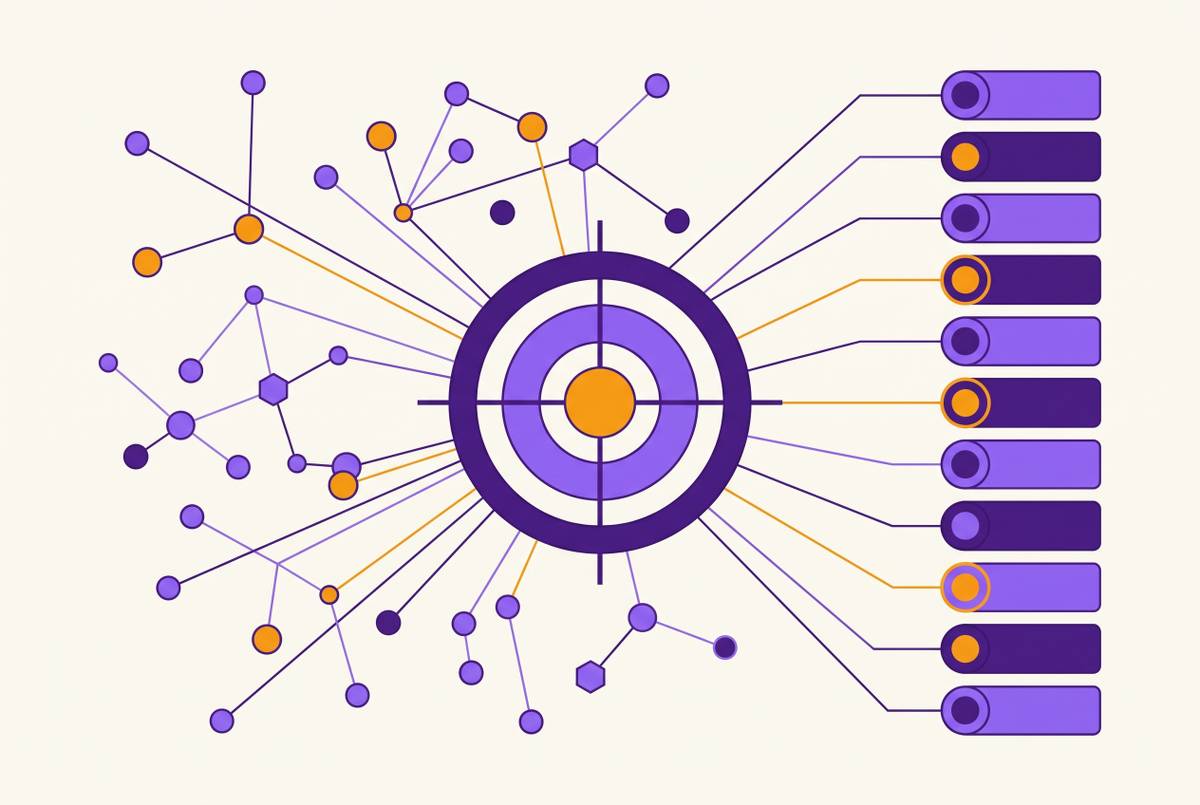
The first tool most founders reach for is investor-matching, and its limits appear as soon as a founder tries to use its output as a target list. The tags an AI system assigns to a fund are coarser than they look. "Invests in AI" covers foundation model labs, vertical SaaS companies with an AI feature, AI infrastructure providers, and thin application-layer wrappers built on someone else's model, all lumped under one label. A fund that led a large generative AI Series B is not automatically the right target for a pre-seed healthtech company raising a small seed round, even if both companies show up under the same sector tag.
Fund activity data ages faster than most AI systems can track it. A founder can generate a 50-name list that includes investors who stopped writing checks in 2023, each one plausible on paper, and then spend weeks running an outreach campaign that goes nowhere, because the fund quietly stopped doing what the data says it still does. A related failure appears in attribution, where models often name the wrong partner as the lead on a round, especially at multi-partner firms, where the fund is real and the deal is real but the partner the tool names never wrote the check. A founder who leads with that name in a cold email has made an error that signals carelessness before the conversation even starts.
None of this means the lists are worthless. AI-tooling proponents argue that even an imperfect machine-built list beats a hand-built one for speed, and that much is true. The failure is not in using the tool, it is in treating its output as a finished target list rather than what it actually is: a research lead that still needs a verification pass. Checking each name against SEC EDGAR filings, the firm's own site, and recent portfolio announcements is unavoidable work, and skipping it is how founders lose both time and credibility on investors who were never live.
AI-Generated Pitch Content and the Credibility Problem
Evidence of the fabrication risk in AI drafting tools comes from outside fundraising. In one documented case, Microsoft Copilot generated a banking client's slide stating a funding increase of 43 percent in Q3 2025, when the actual figure was 12 percent, a near fourfold overstatement delivered with the same confident formatting as every correct number on the page. Microsoft's own materials acknowledge that Copilot sometimes fabricates information. A founder who pastes an AI-generated growth number into a pitch deck without checking it is one slide away from handing an investor a reason to stop trusting every other number in the deck.
The deeper problem with AI-generated pitch content is what the content signals about how seriously the founder took the moment. Investors increasingly read a generic, over-polished deck as evidence that the founder did not think hard enough about the pitch to write it themselves, and polish is not a substitute for that thinking. A deck can be visually flawless and still read as thin, and experienced investors notice the difference on first pass.
Template saturation makes this worse. When large numbers of founders run the same AI deck tools, the output converges: the same slide order, the same boilerplate competitive-landscape grid, the same market-sizing frame built from a top-down total addressable market calculation that investors have seen a hundred times that month. Every deck looks professional and none of them feel considered, an uncanny valley where a founder's actual differentiation gets buried under a layout indistinguishable from the last ten pitches in that investor's inbox.
Stage calibration compounds the problem, because most AI tools do not account for it. A pre-seed deck and a Series A deck need different narratives, different depth of evidence, and different levels of financial detail, and a tool that generates a generic structure without regard to stage produces a mismatch that reads as inexperience to anyone who has sat through enough pitches to notice. The deepest gap is the narrative layer: the specific story of why this fund, why this partner, and why now given what that partner has said publicly about their current thesis. That story depends on knowing things about a specific investor that an AI system cannot reliably hold and weave into an argument. A founder who uses AI to build the scaffold and then rewrites the actual narrative from their own conviction sidesteps every one of these failures, and that is the entire point: the scaffold is AI's job, inhabiting it is the founder's.
Pipeline management AI and the operational memory problem
Pipeline tools fail differently than drafting tools do. The failure is the absence of operational memory, the connective tissue that links one investor interaction to the next and shows whether a raise has real momentum or just a string of disconnected activity. A well-written follow-up email does not, on its own, update an investor's pipeline stage, preserve who on the founding team owns that relationship, or flag the next action that needs to happen. The intelligence lives in the moment the email gets written, and it needs somewhere to go afterward or it evaporates.
Fragmentation makes this worse in practice. Investor research sits in one tool, relationship history sits buried in an inbox thread, follow-up timing sits on a calendar, and diligence materials sit in a shared folder somewhere else. Every handoff between those tools is a place where you can lose ownership and next-action visibility. A founder using a general-purpose chatbot for outreach drafting is working from a system that carries no context about which investors are currently active, what stage they tend to write checks at, or whether a given traction slide would actually land with a given fund's current thesis. That founder is drafting blind, one email at a time, with no memory connecting Tuesday's conversation to Thursday's follow-up.
Volume turns this into a bigger problem than it would otherwise be. An AI system working from incomplete or outdated investor records produces a faster version of a bad list, and the speed that looked like an advantage becomes a liability the moment the underlying data is wrong. What this argues for is not abandoning AI in pipeline work, but insisting on a system that actually connects investor intelligence, outreach history, and next-action visibility in one place, rather than a set of disconnected tools stitched together with manual copy-paste.
The moments that close rounds are beyond what any AI tool can reach
An investor is not buying a well-researched list or a polished deck. An investor is buying into a founder's judgment and staying power, and that transaction happens in a live conversation, not in any automated output a tool can generate beforehand. Conviction is the clearest example of something AI cannot manufacture. The actual question an investor is weighing, whether they believe this person will find a way through when the plan stops working, gets transmitted through tone, through stamina across a long diligence process, and through the specificity of a founder's own thinking under pressure. None of that travels through a generated paragraph.
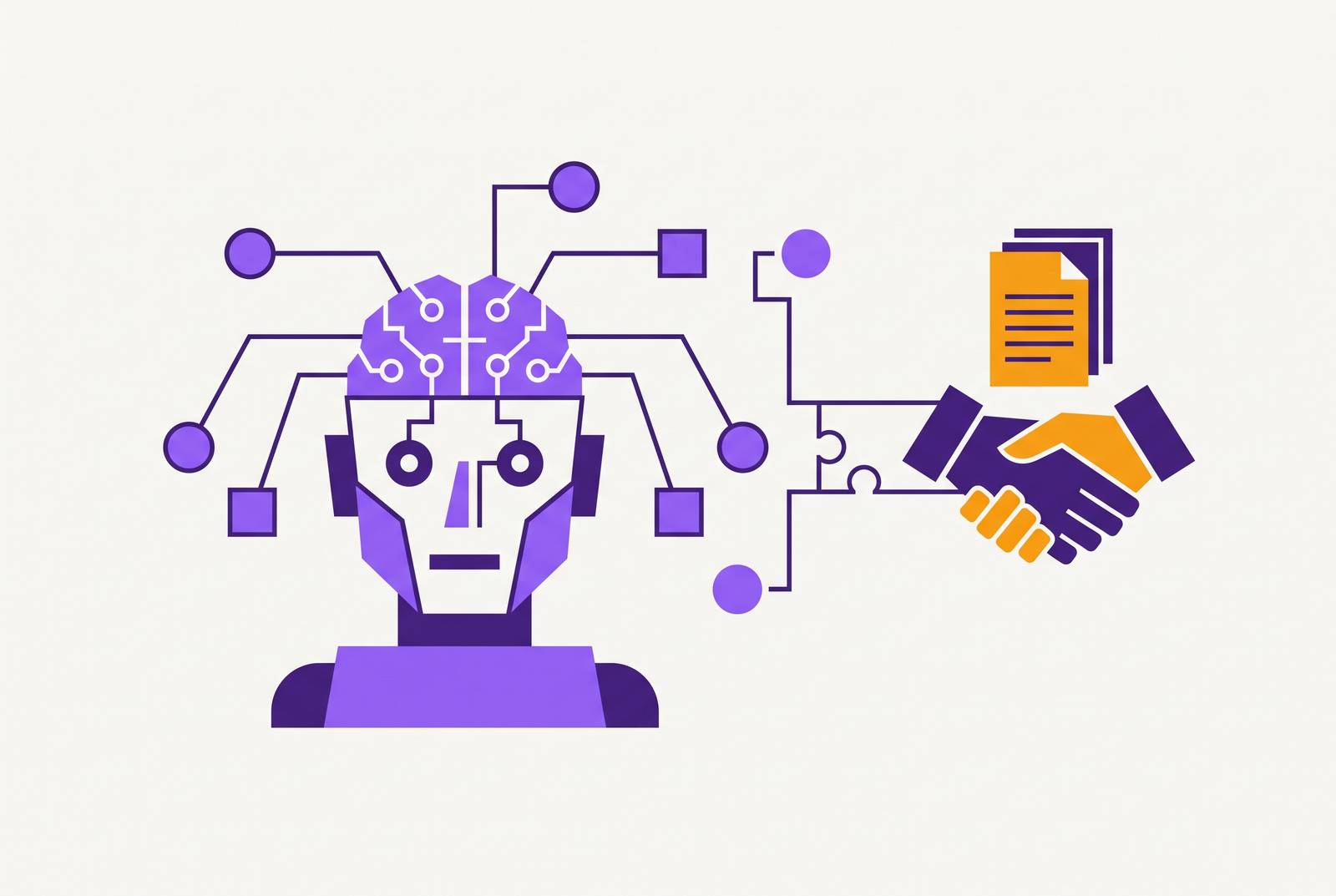
AI can map a path through a network. Integrating with LinkedIn and Gmail to surface who knows whom is a real capability, and it can shorten the search for a warm introduction considerably. What it cannot supply is the trust that makes that introduction land once it is made. The introduction itself is a mechanism a tool can help assemble. A relationship is the asset, and a founder can build a relationship only one person at a time, not a mechanism that scales.
The same gap is visible inside the meeting room. Reading a live conversation, noticing when an investor hesitates on a specific question, pivots toward a different concern than the one the deck addressed, or signals a quiet mismatch with their stated thesis, is a judgment call that belongs entirely to the founder in that chair. The founder who catches that shift and adjusts in real time moves the conversation forward. The founder who delivers the rehearsed version of the pitch regardless of what just happened in the room does not, no matter how good the deck behind them looks.
AI tools used by venture funds to screen inbound deal flow compress the time it takes a partner to decide whether a company is worth a first conversation, but they do not compress the number of conversations a founder has to have to get twelve funds to conviction, which is the counterintuitive wrinkle on the investor side. A founder running twelve parallel fund processes will spend weeks repeating the same answers to the same diligence questions before any single fund reaches a decision, because every fund still runs its own process from scratch regardless of how fast its screening tool works. AI deployed against a founder from the investor side speeds up the funnel's entry point. It does not remove a single hour of the human work you need to walk twelve different partnerships to yes.
The division of labor between AI and the founder
The skill that separates the founders who close rounds efficiently from the ones who burn months is knowing precisely where in the process to hand work off and where to take it back.
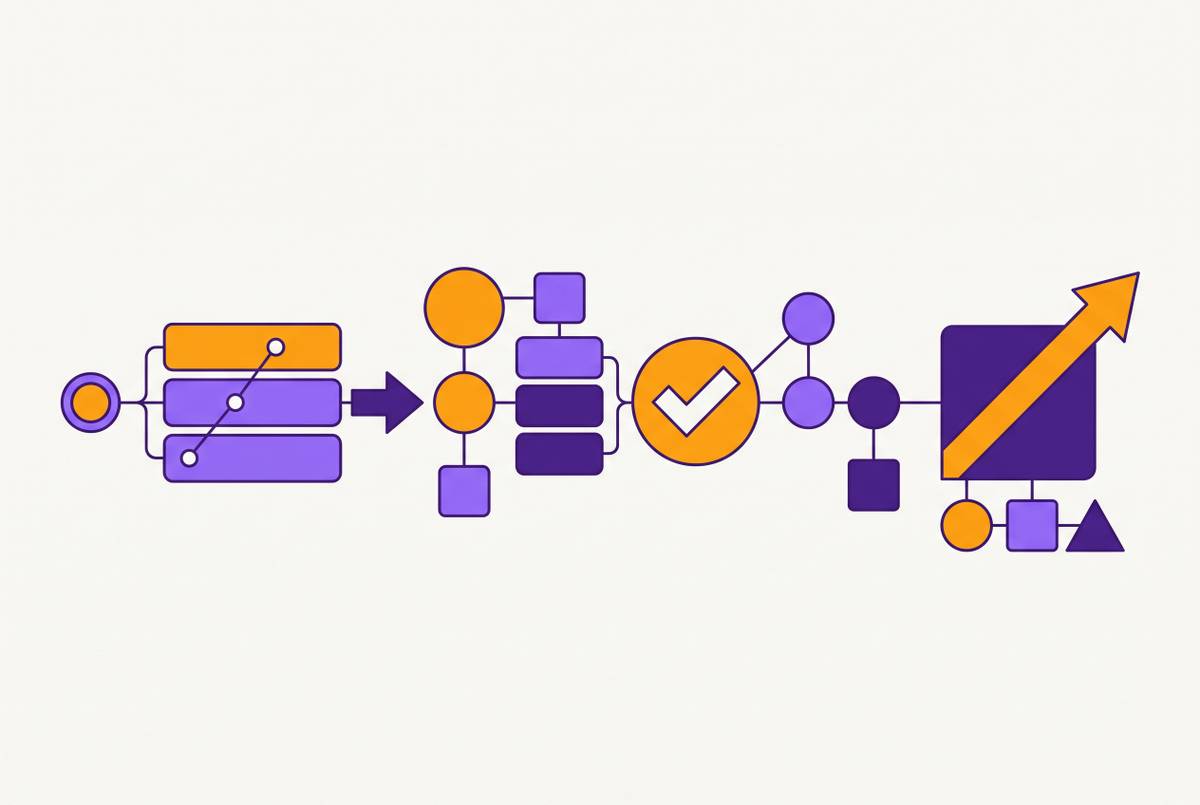
Hand to AI: building the initial investor universe, running the first pass of thesis-matching and portfolio parsing, drafting first-pass personalized outreach, assembling deck scaffolding and visual design, researching a specific investor ahead of a meeting, and tracking pipeline hygiene and follow-up cadence across a long list.
Take back control of: verifying every AI-generated investor attribution against primary sources before a single email goes out, rewriting the deck narrative in the founder's own voice with logic specific to each investor, every live investor conversation without exception, signaling conviction, and the relationship-building that needs to happen months before a round formally opens.
The verification step is not optional polish; it is what makes the rest of the AI output usable. Checking names, funds, and recent portfolio activity against SEC EDGAR filings and the firm's own public materials before outreach goes out is the difference between a research lead that saves time and a list that wastes it.
Post-Demo Day outreach is where this division of labor matters most visibly. Partners who see hundreds of similar emails in a short window recognize generic AI personalization immediately and flag it as noise. The outreach that actually lands references a specific portfolio company the fund backed, a specific public statement the partner made, a specific signal about where their thesis currently sits, and choosing which of those details to surface is a judgment call no tool can make on a founder's behalf. Founders who understand this split, who let AI handle the volume and research while keeping every judgment call for themselves, run faster raises with fewer credibility failures, because they never ask a tool to do the one part of the job that was always going to require a person.